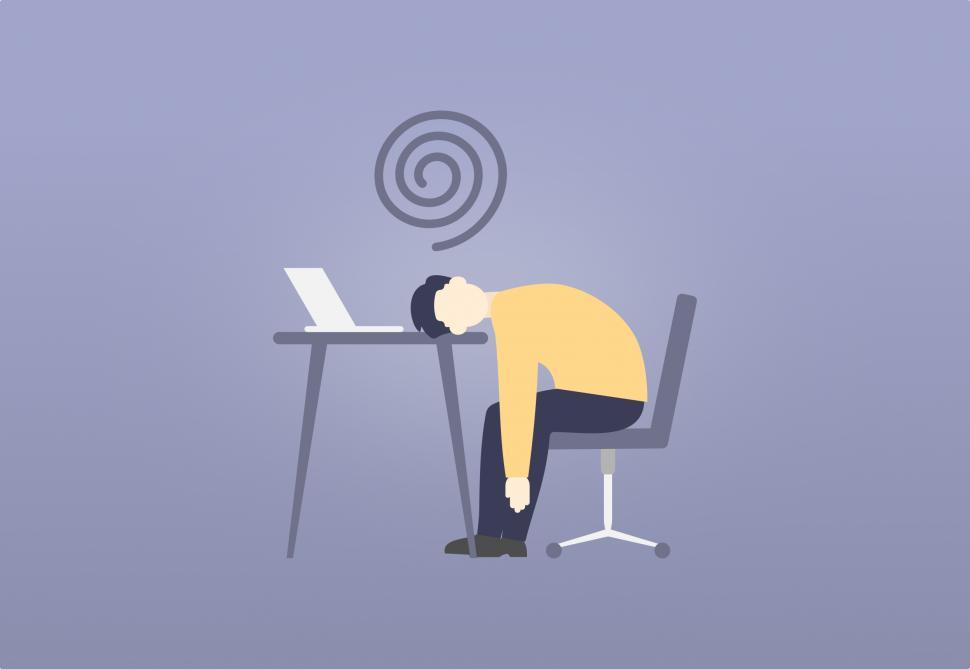
Burnout and stress are huge factors in determining both students and educators’ mental health, and the statistics are not looking good. According to ASCLS, four out of five college students reported experiencing burnout during their undergraduate education. The National College Health Assessment states that 80% of college students report feeling overwhelmed and 40% had difficulty functioning. And educators are not immune to these issues, either. According to ASCLS, a 2022 study found that 55% of healthcare educators reported moderate to severe burnout. That’s over half. However, I think all of these alarming statistics raise the question- what is burnout, what can cause burnout, and what can we do to save us all from this stress?
According to the National Library of Medicine, burnout syndrome is defined as an individual response to chronic stress that develops progressively and can eventually become chronic, causing health risks. Burnout is not a personal problem, but a consequence of certain characteristics of one’s work activity. Historically, the first author to use the term “burnout” was Graham Greene in his novel “A Burnt-out Case.” In this novel, he told a story of an architect who found no purpose in his work and no passion in his life. The term “burnout” was later used by Freudenberger, a German-born American psychologist. He used it to describe a state of exhaustion, fatigue, and frustration all at once. Initially, Fruedenberger exclusively attached the term to a situation where volunteer workers in a mental care center experienced drastic losses of energy to the point of exhaustion and emotional imbalance.
Now, these psychologists used the word years ago, but what do scientists now have to say on the definition of burnout? According to Mental Health America, lots of things. Burnout happens when ongoing stress exhausts you mentally, emotionally, and physically. It usually occurs when one is trying to handle too many duties such as working, learning, or parenting. It leaves one feeling drained, disconnected, and overwhelmed. The common signs of burnout are constant exhaustion, dreading responsibilities once enjoyed, emotional numbness, struggling to focus, irritability, and having frequent physical symptoms such as headaches and muscle aches.
All of this sounds horrible- I know! What can one do to avoid burnout or cure it? First, it’s important to acknowledge there is a problem. This does not mean, in the back of your mind, to understand you’re struggling with burnout, but fully become aware of the symptoms you are experiencing and put intention in your life to slow down. Give yourself a pat on the back and allow yourself to sit without any distraction to allow your brain some rest. Set boundaries with friends, schoolwork, and employers. Yes, this may be hard, but this can be little things that won’t take away from studying or employment like making sure you aren’t worrying about school while you’re eating lunch. Stretch before bed, sit quietly for a few minutes at night, or practice slow breathing during a warm shower. These things will help put your mind at ease and cut out all the strain. It’s important to take care of yourself and remember you are not a machine- you’re an individual who deserves to feel your best.