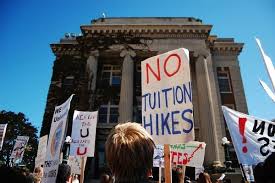
There’s something on everyone’s mind each time they go into their FASFA and agree to more… and more… and more student loans—Is this all worth it? Now don’t get me wrong, there’s something great and empowering about the academic setting Presbyterian College gives access to for its students. However, as our tuition goes up by thousands and thousands while the job market becomes more and more competitive, students cannot help but question the value of the degree they are getting.
National student loan debt in America is reaching $1.8 trillion dollars, which is causing many Americans to question whether college is not only worth the money but if it’s the best financial investment for their youthful selves. According to the Federal Reserve Bank of St. Louis, in 1980, tuition was $3,499. If we were to take today’s tuition and adjust it to 1980’s dollar value, college tuition today would be $8,798. That’s more than a 100% increase in 40 years.
However, a big factor on people’s minds is the risk of unemployment. It’s a fact, according to the St. Louis Federal Reserve Bank, that high school-educated workers tend to experience higher rates of unemployment. In this competitive economy and even more competitive job market, the idea of unemployment is no more than around the corner, something people are constantly finding themselves thinking about.
A big topic in this argument is the question of whether certain degrees are better than others—and the answer is unfortunately, yes. According to Freopp, around 31% of students enrolled in higher education have degrees that do not lead to a return on investment. In short, they do not get their money back. In the article, it states, “the earnings benefits of the degree are unlikely to fully compensate students for the cost and risk of pursuing post-secondary education.” While 23% of bachelor’s degree programs yield negative ROI, only 6% have an expected value above a million dollars. This is a great risk for the average young adult considering the job market’s plummeting amount of available openings and opportunities to earn more.
However, many argue that college is not only about what happens after graduation but also after the classes themselves when you are free to roam. Arguably, one of the best things someone can have is an experience different from the way they grow up, especially before their opinions and personality fully form in adulthood—and this is what a true college experience gives you. College forces you to collaborate in clubs, on schoolwork, or in teams with people from different economic classes, social groups, or regions of the country. It allows you to go as far as to engage with peers from different nations or teachers with decades of experience in a field you find yourself interested in. In short, it gives you a broader outlook on life and a deeper appreciation for academia and the art of what it means to learn. To summarize, it’s important you decide what you want by looking at all the factors at play.
Sources:
https://educationdata.org/student-loan-debt-statistics
Does College Pay Off? A Comprehensive Return On Investment Analysis
https://www.stlouisfed.org/publications/page-one-economics/2023/09/01/is-college-still-worth-the-high-price-weighing-costs-and-benefits-of-investing-in-human-capital